 Core Revitalizing Center
Be the
Change
Meaningful change begins with understanding what is actually happening. Good medical care begins there, too.

A conversation. A relationship. A way forward.
At Core Revitalizing Center, care begins with careful assessment, individual context, and the recognition that a diagnosis is only one part of understanding a person.
Change begins with
being understood
“Be the Change” is not a slogan about trying harder. Meaningful change begins with understanding the person, determining what is actually happening, and creating the conditions in which informed change becomes possible.
At CRC, assessment begins by listening carefully, obtaining an accurate history, and questioning assumptions rather than beginning with a predetermined answer. Clinical expertise informs the options, but it does not replace your agency. In psychiatric care, this includes distinguishing illness from grief, anger, fear, or anxiety that may be understandable responses to what is happening.
Eight Dimensions of Wellness
The eight dimensions of wellness offer a way to reflect on the different parts of your life, from physical health and relationships to daily responsibilities and personal values.
- Emotional
- Physical
- Social
- Intellectual
- Financial
- Occupational
- Environmental
- Spiritual

Understand
Listen carefully, obtain an accurate history, and identify what may be contributing to the problem.
Personalize
Build treatment around the individual rather than a predetermined protocol.
Protect
Create the privacy and trust necessary for honest psychiatric care.
Change
Use that understanding to make informed treatment decisions and meaningful changes.
Three commitments.
One approach to care
Personalized care requires enough continuity to understand the individual. Clinical expertise determines how that information should guide treatment. Confidentiality creates the conditions in which relevant information can be discussed honestly. Together, these commitments define how care is practiced at CRC.
Personalized Care
Personalized care begins with continuity. Treatment builds on history, response over time, goals, physiology, communication style, and relevant medical or developmental context rather than a template. Psychiatric care is provided by Dr. Tariq Halim, and physical therapy by Dr. Banu Acan.
Explore personalized care
Highest Level of Care
Care is provided directly by the treating clinician. Decisions draw on advanced clinical training, current evidence, your history, medical context, prior response, and the limits of what is known.
Explore our standard of care
Confidentiality
Confidentiality is part of treatment, not simply an administrative obligation. CRC is structured to reduce unnecessary third-party involvement while explaining plainly when information remains private and when disclosure may be required by law.
Explore confidentiality Psychiatric care, directly from your physician
Tariq Halim, MD
American Board of Psychiatry and Neurology
I am board certified by the American Board of Psychiatry and Neurology. At CRC, I provide diagnostic assessment and ongoing psychiatric treatment directly, including complex psychopharmacology and care for adults and children with developmental differences.
Care builds over time. I have practiced in Southwest Florida since 2011, and I approach each patient relationship as a long-term one. Decisions draw on current evidence, medical and developmental context, treatment history, medication response, and your goals. Not every difficult emotion is a disorder; part of assessment is distinguishing illness from an understandable response to circumstances.
Learn more about Dr. Halim Areas of care
Find care for what you’re experiencing
You do not need to arrive with a diagnosis. Explore the concerns evaluated at CRC and learn how treatment is guided by your symptoms, history, and goals.
ADHD & Executive Functioning
Attention, planning, organization, impulsivity, and related ADHD concerns.
Explore careMood & Anxiety
Depression, generalized anxiety, panic symptoms, and bipolar disorders.
Explore careAutism & Neurodivergence
Psychiatric care informed by developmental history, communication, and sensory experiences.
Explore careTrauma & OCD
Posttraumatic stress, intrusive thoughts, and obsessive-compulsive symptoms.
Explore careComplex Psychiatric Care
Diagnostic uncertainty, co-occurring conditions, prior treatment challenges, and complex medication regimens.
Explore careSubstance Use Concerns
Assessment of substance use and co-occurring psychiatric symptoms, including opioid use disorder.
Explore care
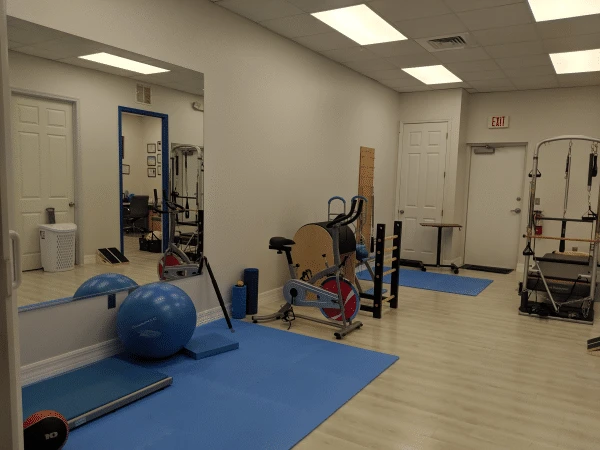
Physical Therapy & Rehabilitation
Individualized treatment for pain, mobility, orthopedic conditions, postsurgical recovery, and other musculoskeletal concerns.
Explore physical therapy Getting started
What to do next
-
01
Choose a service
Review psychiatric services and physical therapy, then choose the service that fits the concern you want evaluated.
-
02
Review scheduling information
Review appointment options and available times, then schedule online or call the office with questions.
-
03
Prepare for your visit
Review patient forms and preparation information. Bring your medication list and relevant prior evaluations.

Private pay, clearly explained
CRC does not bill insurance for visits. Superbills are available for patients seeking out-of-network reimbursement, subject to their plan’s benefits. Review billing information.

Care in the appropriate setting
Initial psychiatric evaluations are generally conducted in person, with follow-up care available in person or by telemedicine when appropriate. Physical therapy evaluations and treatment are provided in person.
Understanding beyond the appointment
Articles examine psychiatry, neurodivergence, medication, healthcare systems, and emerging clinical evidence in greater depth.

Nov 21, 2026
The Hidden Costs of Changing a Psychiatric Treatment That Works
A new medication trial can mean missed shifts, extra visits, and uncertainty about symptoms that took years to settle. What would make that trade-off worthwhile?
Read article
Oct 30, 2026
Dementia Prevention: What Helps Protect Your Brain at Every Age
Dementia is not an inevitable part of aging. Learn what the 2024 Lancet Commission says about 14 potentially modifiable risk factors and practical ways to support brain health.
Read article
Oct 1, 2026
Parenting Through the Mirror: When Our Children Reflect Our Own Anxieties
A child’s disappointment can sometimes reflect a parent’s own patterns. Dr. Tariq Halim considers temperament, emotional regulation, guilt, mindfulness, and why resemblance is not destiny.
Read articleRevitalizing the Mind-Body Connection
Explore appointment options and schedule your visit.